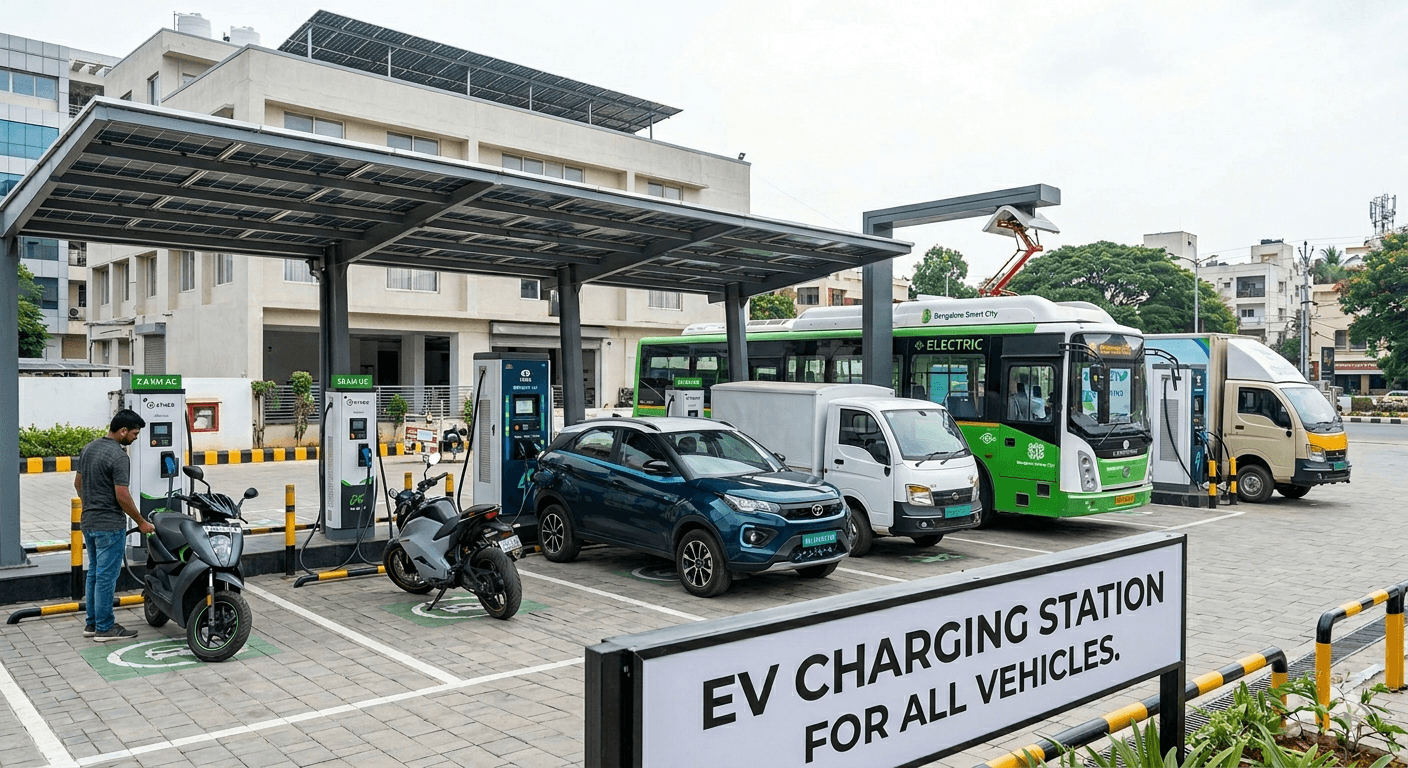
Not All EVs Charge the Same: The Time Test
Compare Real Electric Vehicle Charging Times Across Vehicle Types
Introduction
Electric vehicles (EVs) are rapidly transforming how India moves—especially in cities like Bengaluru, where rising fuel costs and sustainability goals are pushing adoption. But one common misconception still persists: all EVs charge the same way and in the same time.
In reality, charging time varies significantly depending on the type of vehicle, battery capacity, charger type, and usage patterns. From electric scooters to commercial fleets, understanding these differences is crucial for making the right EV decision—whether you're a homeowner, business owner, or fleet operator.
This guide breaks down real-world charging times across EV categories, helping you make smarter energy and mobility choices.
What Determines EV Charging Time?
Before comparing vehicles, it’s important to understand the key factors affecting charging duration:
1. Battery Capacity (kWh)
Larger batteries take longer to charge.
- Scooter: 2–4 kWh
- Car: 30–80 kWh
- Commercial vehicles: 100+ kWh
2. Charger Type
- Slow Charging (AC, 3.3–7.4 kW): Home charging
- Fast Charging (DC, 30–150 kW+): Public stations
- Ultra-Fast Charging: High-end infrastructure (limited in India)
3. Charging Infrastructure
- Home vs public station
- Grid stability
- Installation quality
4. Battery State & Temperature
Charging slows down after ~80% to protect battery health.
Charging Time Comparison Across EV Types
Let’s break it down with realistic use cases in India:
Electric Scooters
Battery Size: 2–4 kWh
Examples: Ola S1, Ather 450X
Charging Type | Time Required |
| Home Charger | 4–6 hours |
| Fast Charger | 1–2 hours |
Use Case Insight:
Perfect for daily commutes. Most users charge overnight at home, making charging time almost irrelevant.
Electric Bikes (Premium / High-speed)
Battery Size: 3–7 kWh
Charging Type | Time Required |
| Home Charging | 5–8 hours |
| Fast Charging | 2–4 hours |
Use Case Insight:
Growing segment for urban riders. Charging time is manageable but depends on access to fast chargers.
Electric Cars (Personal Use)
Battery Size: 30–80 kWh
Examples: Tata Nexon EV, MG ZS EV, Hyundai Kona
Charging Type | Time Required |
| Home AC Charger (7.4 kW) | 6–10 hours |
| DC Fast Charging | 45–90 minutes (0–80%) |
Use Case Insight:
- Home charging covers 90% of daily needs
- Fast charging is mainly used for highways or urgent top-ups
Electric Commercial Vehicles (3-wheelers & Small Vans)
Battery Size: 7–30 kWh
Charging Type | Time Required |
| Depot/Home Charging | 6–8 hours |
| Fast Charging | 2–4 hours |
Use Case Insight:
Charging is typically scheduled overnight or between shifts. Efficiency matters more than speed.
Electric Buses & Large Fleets
Battery Size: 100–300+ kWh
Charging Type | Time Required |
| Depot Charging | 6–12 hours |
| Fast Charging | 1–3 hours |
Use Case Insight:
Fleet operators rely on planned charging infrastructure, not public chargers. Downtime = revenue loss.
Real-World Charging Scenarios
1. Home Charging (Most Common)
- Done overnight
- Lower electricity cost
- Ideal for scooters and cars
Example:
A Bengaluru household charging a Nexon EV overnight pays significantly less than petrol costs.
2. Workplace Charging
- Growing trend in IT hubs
- Reduces range anxiety
- Adds convenience for employees
3. Public Fast Charging
- Useful for long trips
- Still developing across India
- Costs more than home charging
Why Charging Time Matters Differently for Each User
Charging time is not just about speed—it’s about fit for purpose.
- Daily commuters: Slow overnight charging is enough
- Ride-hailing drivers: Need faster turnaround
- Fleet operators: Require optimized charging schedules
- Businesses: Need infrastructure planning
The key question is not “How fast does it charge?”
It’s “Does it fit your daily usage pattern?”
Smart Charging Strategies for Bengaluru Users
With rising EV adoption in Bengaluru, here’s how you can optimize:
Install a Dedicated Home Charger
Reduces dependency on public infrastructure
Use Time-of-Day Charging
Charge during off-peak hours to save on electricity
Combine Solar + EV Charging
Hello Power specializes in solar-integrated EV solutions, helping reduce long-term energy costs
Plan Fast Charging Only When Needed
Avoid overusing fast charging to extend battery life
The Future of EV Charging in India
- Faster DC chargers expanding across highways
- Battery swapping for commercial segments
- Smart grids and AI-based load management
- Solar-powered EV charging stations
India is moving toward a hybrid charging ecosystem, combining convenience, speed, and sustainability.
Conclusion
Not all EVs charge the same—and that’s actually a good thing. Each vehicle type is designed for a specific purpose, and its charging behavior reflects that.
Whether you're riding a scooter, driving a car, or managing a fleet, the smartest approach is to align charging habits with usage patterns rather than chasing the fastest option.
At Hello Power Private Limited, Bengaluru, we help individuals and businesses design efficient EV charging and solar solutions tailored to their needs—ensuring reliability, cost savings, and sustainability.