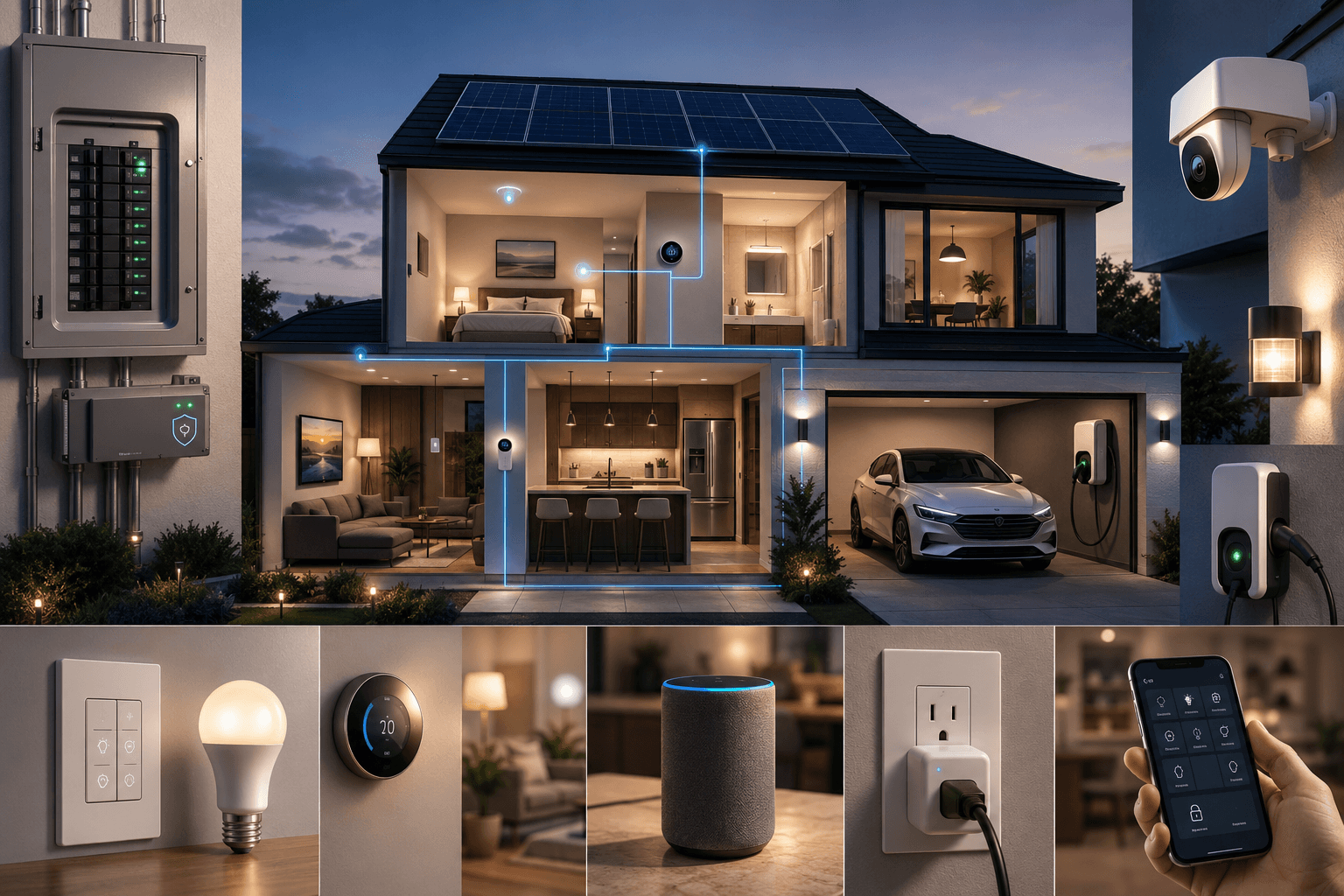
Smart homes are no longer futuristic concepts reserved for luxury houses. Today, everything from lights and thermostats to security cameras and EV chargers can be controlled from your phone or through voice assistants. But before filling your home with smart gadgets, there’s one important question every homeowner should ask:
Is your home’s electrical system ready for smart technology?
Many homeowners jump into smart upgrades only to face issues like flickering lights, overloaded circuits, poor connectivity, or devices constantly disconnecting. The reality is simple — a smart home is only as reliable as the electrical infrastructure behind it.
At HelloPower, we believe building a smarter home starts with building a safer and stronger electrical foundation. Here’s everything you need to know before transforming your home into a connected smart ecosystem.
What Does “Smart Home Ready” Really Mean?
A lot of people think smart homes only require good Wi-Fi. While internet connectivity is important, true smart-home readiness goes much deeper.
A smart-home-ready electrical system includes:
- Adequate electrical capacity
- Proper grounding and safety protection
- Smart-switch compatible wiring
- Reliable power distribution
- Surge protection
- Stable networking infrastructure
In simple terms, your electrical panel, circuits, outlets, and wiring must be capable of handling modern smart devices without overloading or creating safety risks.
For example:
- Installing smart lighting throughout your home may require neutral wires in switch boxes.
- Adding an EV charger may require a dedicated 240V circuit.
- Security systems and networking equipment may need backup power solutions.
Without the right preparation, even the best smart devices can become unreliable.
Understanding Your Smart Home Ecosystem
Every smart device affects your home’s electrical system differently. Before planning upgrades, it’s helpful to categorize the devices you plan to use.
Smart Lighting
This includes:
- Smart bulbs
- Smart switches
- Smart dimmers
- Automated lighting systems
Smart bulbs are simple to install but require constant power. Smart switches often need neutral wiring and compatible LED circuits.
Smart Climate Control
Devices like:
- Smart thermostats
- Smart AC controllers
- Automated HVAC systems
Most smart thermostats need a common “C-wire” for continuous power. Older homes may not have this wiring in place.
Smart Security Systems
Examples include:
- Video doorbells
- Smart cameras
- Motion sensors
- Smart locks
- Smart smoke detectors
Some devices use battery power, while others require transformers, Ethernet cabling, or dedicated outlets.
Smart Appliances
Modern kitchens now include:
- Smart refrigerators
- Smart ovens
- Smart washing machines
- Voice-controlled appliances
These often use existing circuits but increase the overall electrical load on the home.
EV Charging Systems
One of the biggest electrical upgrades in modern homes is EV charging.
Level 2 chargers typically require:
- 240V dedicated circuits
- 40–50A breakers
- Panel capacity evaluation
- Professional installation
As EV adoption grows, electrical readiness becomes essential.
Why Electrical Panel Capacity Matters
Your electrical panel is the heart of your home’s power system.
Older homes often have:
- 60A panels
- 100A panels
- Limited breaker space
Modern smart homes demand far more power than homes built decades ago.
Signs your panel may need upgrading:
- Frequently tripping breakers
- Flickering lights
- Warm outlets
- Excessive extension cord usage
- Insufficient outlets
If you’re adding:
- EV chargers
- Smart HVAC systems
- Home offices
- Smart appliances
- Large entertainment systems
You may need a panel upgrade to 200A service.
A modern panel provides:
- Better load handling
- More dedicated circuits
- Improved safety
- Future-ready expansion
Neutral Wires: The Hidden Requirement for Smart Switches
One of the most common smart-home installation problems involves missing neutral wires.
Traditional switches only interrupted the “hot” wire and didn’t require neutrals at the switch location. Many older homes were wired this way.
However, smart switches need continuous power to operate their wireless communication systems.
That means they usually require:
- Hot wire
- Neutral wire
- Ground wire
Without a neutral wire:
- Smart switches may not function properly
- LEDs may flicker
- Devices may disconnect
- Bulbs may glow faintly when turned off
Before buying smart switches, check whether your switch boxes contain neutral wiring.
Smart Lighting: Bulbs vs Smart Switches
Smart Bulbs
Advantages:
- Easy installation
- No rewiring
- App-controlled lighting
- Color-changing features
Limitations:
- Wall switches must stay ON
- Power interruptions disconnect bulbs
- Less intuitive for guests
Smart Switches
Advantages:
- Traditional wall-switch experience
- Whole-room lighting control
- Better long-term usability
- More stable automation
Considerations:
- Neutral wire required
- Multi-way circuits can be complex
- LED compatibility matters
For most homeowners, smart switches provide the best long-term experience when installed correctly.
Avoiding Common Smart Home Electrical Problems
Flickering Lights
Usually caused by:
- Incompatible dimmers
- Non-dimmable LEDs
- Missing neutral wires
- Poor wiring connections
Overloaded Circuits
Too many smart devices on one circuit can cause:
- Breaker trips
- Voltage drops
- Device instability
Dedicated circuits help distribute loads safely.
Weak Wi-Fi Coverage
Smart homes rely heavily on stable connectivity.
Solutions include:
- Mesh Wi-Fi systems
- Ethernet wiring
- Access points
- Structured networking
Poor Surge Protection
Smart devices contain sensitive electronics vulnerable to:
- Lightning
- Voltage spikes
- Utility surges
Without protection, expensive devices can fail instantly.
Whole-Home Surge Protection Is Essential
A whole-home surge protector acts like a shield for your electronics.
It protects:
- Smart TVs
- Appliances
- EV chargers
- Smart panels
- Routers
- Security systems
Layered protection works best:
- Whole-home surge protector at the electrical panel
- Surge-protected outlets and power strips
- UPS backups for networking equipment
For smart homes, surge protection isn’t optional — it’s necessary.
Backup Power for Smart Homes
Power outages affect more than lighting.
Without backup power:
- Wi-Fi shuts down
- Cameras disconnect
- Smart locks lose connectivity
- Automation stops working
Using UPS systems for:
- Routers
- Modems
- Smart hubs
- Security systems
helps maintain connectivity during outages.
For complete reliability, some homeowners install:
- Inverter systems
- Home batteries
- Standby generators
Networking Infrastructure Matters Too
A smart home depends equally on electrical wiring and data connectivity.
Why Ethernet Still Matters
Wi-Fi is convenient, but wired connections offer:
- Faster speeds
- Lower latency
- Greater reliability
- Reduced wireless congestion
Devices that benefit from Ethernet:
- Smart TVs
- Gaming systems
- Security cameras
- Home office equipment
- Smart hubs
Power over Ethernet (PoE)
PoE technology delivers:
- Data
- Electrical power
through a single Ethernet cable.
Perfect for:
- Security cameras
- Wi-Fi access points
- Smart intercoms
- Touchscreen panels
This reduces clutter and improves installation quality.
Room-by-Room Smart Home Planning
Kitchen
Focus areas:
- Dedicated appliance circuits
- Smart lighting
- GFCI protection
- USB outlets
- Under-cabinet smart lighting
Living Room
Plan for:
- Entertainment center power
- Surge protection
- Hidden TV outlets
- Smart lighting scenes
- Voice assistant placement
Bedrooms
Consider:
- Smart dimmers
- USB charging outlets
- Smart fans
- Automated blinds
- Smart alarm systems
Bathrooms
Important upgrades:
- GFCI outlets
- Smart mirrors
- Smart exhaust fans
- Heated floor controls
- Moisture-safe installations
Home Office
Modern home offices require:
- Dedicated circuits
- UPS backups
- Ethernet wiring
- Multiple outlets
- Stable lighting
Garage
Critical for:
- EV charging
- Smart garage openers
- Workshop circuits
- Freezer protection
- Outdoor networking
Outdoor Areas
Outdoor smart tech may include:
- Smart floodlights
- Security cameras
- Landscape lighting
- Smart irrigation
- Gate automation
All outdoor installations should use:
- Weatherproof outlets
- GFCI protection
- Outdoor-rated cabling
DIY vs Hiring a Professional Electrician
Some smart-home upgrades are beginner-friendly.
DIY-Friendly Tasks
- Installing smart bulbs
- Using smart plugs
- Replacing simple outlets
- Setting up Wi-Fi devices
Call a Professional For:
- Electrical panel upgrades
- EV charger installation
- New circuits
- Neutral wire additions
- Surge protection systems
- Multi-way smart switch wiring
- Whole-home rewiring
Electrical mistakes can create serious safety hazards. Professional installation ensures:
- Code compliance
- Safe load distribution
- Reliable performance
- Long-term protection
Smart Home Readiness Checklist
Before purchasing smart devices, ask yourself:
Does your panel have enough capacity?
Are your outlets properly grounded?
Do switch boxes contain neutral wires?
Is your Wi-Fi coverage strong throughout the house?
Do you have surge protection?
Are critical devices backed up with UPS systems?
Do you need additional circuits or outlets?
Are outdoor outlets weatherproof and GFCI-protected?
Can your current wiring handle future upgrades like EV charging?
If the answer to several of these is “no,” your home likely needs electrical preparation before becoming fully smart.
Conclusion
Smart homes are about far more than gadgets. The real foundation of a connected home is safe, modern, and future-ready electrical infrastructure.
From smart lighting and security systems to EV charging and whole-home automation, every upgrade depends on reliable power, proper wiring, and strong protection systems.
Investing in electrical readiness today helps you:
- Avoid costly problems later
- Improve home safety
- Increase energy efficiency
- Future-proof your property
- Enjoy seamless automation experiences
At HelloPower, we help homeowners build smarter, safer, and more efficient homes with the right electrical products and solutions for modern living. Whether you’re upgrading one room or planning a complete smart-home transformation, starting with the right electrical foundation makes all the difference.